If you are asking which contract management software options have the strongest features, the short list depends on what kind of depth you actually need. Enterprise buyers should usually start with Icertis, Sirion, DocuSign CLM, Agiloft, and Conga. Mid-market legal and operations teams should usually compare Ironclad, Juro, LinkSquares, and SpotDraft before they get seduced by heavyweight enterprise platforms. Sales-led teams with simpler contract operations should look at PandaDoc, Oneflow, and Contractbook.
Short answer
The strongest feature depth in the market usually shows up in three layers:
- Enterprise control depth: Icertis, Sirion, DocuSign CLM, Agiloft, and Conga.
- Modern legal ops depth: Ironclad, Juro, LinkSquares, and SpotDraft.
- Sales-led document speed: PandaDoc, Oneflow, and Contractbook.
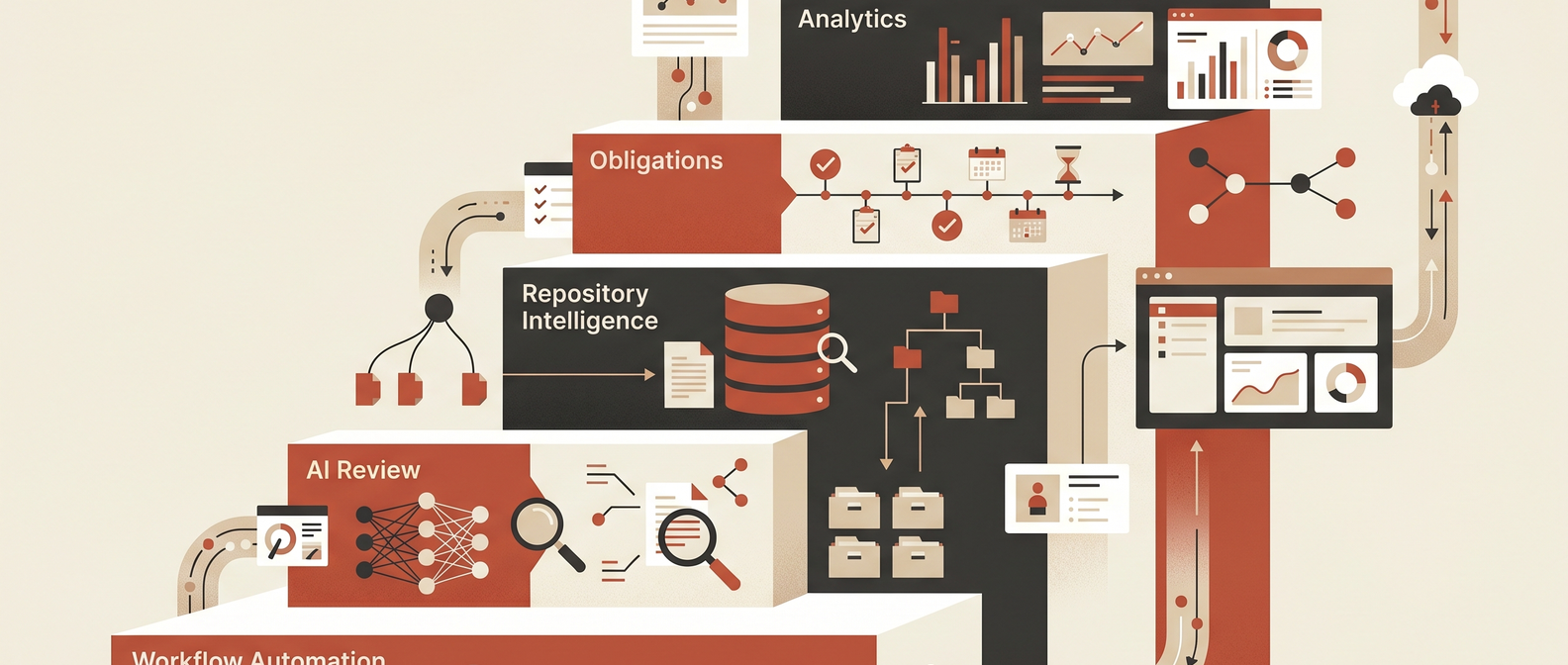
The right tool is not the one with the most boxes on a pricing page. It is the one that goes deepest on your real bottleneck: intake, playbooks, approvals, repository quality, clause review, obligations, renewals, or integrations. If you have not mapped that workflow yet, start there before you buy. That same workflow-first discipline is why we recommend pairing this article with our guides to best contract management software 2026, best contract management software with great usability, and broader business process automation solutions.
Contract management feature-depth matrix
This matrix reflects public feature breadth as of May 4, 2026, based primarily on official vendor product pages, documentation, and help content. It is a workflow-fit guide, not a paid analyst ranking.
| Software | Workflow automation | AI review / extraction | Repository / search | Obligations / analytics | Integrations / admin depth | Best fit |
|---|---|---|---|---|---|---|
| Icertis | Excellent | Excellent | Excellent | Excellent | Excellent | Enterprise CLM, procurement, post-signature performance |
| Sirion | Strong | Excellent | Strong | Excellent | Strong | Obligation-heavy enterprise contracting |
| DocuSign CLM | Excellent | Excellent | Strong | Strong | Excellent | Enterprise teams that need configurable workflows at scale |
| Agiloft | Excellent | Strong | Strong | Strong | Excellent | Organizations that need no-code configurability |
| Conga | Strong | Strong | Strong | Strong | Excellent | Salesforce-heavy revenue and enterprise contract operations |
| Ironclad | Excellent | Excellent | Strong | Strong | Strong | Modern legal ops with strong intake and collaboration needs |
| Juro | Strong | Excellent | Strong | Good | Strong | Business-user self-serve contracting with AI review |
| LinkSquares | Good | Strong | Excellent | Strong | Strong | Repository intelligence and legal reporting |
| SpotDraft | Strong | Strong | Strong | Strong | Strong | Mid-market teams that need workflow, collaboration, and reporting balance |
| Oneflow | Good | Strong | Good | Good | Good | Commercial teams that need AI review and digital contracts |
| PandaDoc | Good | Good | Good | Good | Strong | Sales proposals, order forms, and lighter commercial contracts |
| Contractbook | Good | Strong | Good | Good | Good | Smaller teams centralizing contracts quickly |
Which platforms go deepest on features?
Best enterprise feature depth: Icertis, Sirion, DocuSign CLM, Agiloft, Conga
These platforms matter when contracting is tied to procurement, revenue, finance, supplier performance, regulatory exposure, or multi-entity governance.
- Icertis stands out when you need the full stack: contract analytics, operations, performance monitoring, AI-powered risk detection, and post-signature tracking tied to business systems.
- Sirion is especially strong when the problem is not just getting contracts signed but managing obligations, risk, and value realization after signature.
- DocuSign CLM remains one of the deepest general-purpose enterprise options because it combines configurable workflows, AI-assisted review, an AI-powered repository, and a large integration footprint.
- Agiloft is strongest when you need no-code flexibility and internal admins who want to shape workflows, dashboards, and rules without waiting on engineering.
- Conga deserves a close look when agreement hierarchies, Salesforce alignment, contract intelligence, and Word-based contract operations matter.
The tradeoff is obvious: these systems have the strongest feature depth because they assume you can govern metadata, permissions, approval rules, and ownership properly. If you cannot, the depth becomes admin debt.
Best modern legal ops feature depth: Ironclad, Juro, LinkSquares, SpotDraft
These tools are usually the better shortlist when you want strong capabilities without defaulting into a year-long enterprise CLM program.
- Ironclad goes deep on no-code workflow design, docx-native collaboration, AI-assisted contracting, and repository-based lifecycle visibility.
- Juro goes deep on embedded contracting, self-serve business workflows, AI review agents, and collaboration from tools like Slack and Word.
- LinkSquares goes deepest on repository intelligence, AI-based extraction, searchable contract data, and operational reporting.
- SpotDraft is a strong all-arounder for mid-market legal teams because it combines workflows, approvals, repository controls, collaboration, signatures, and analytics in a more practical package than many enterprise-first platforms.
If your team cares about strong features but also wants actual adoption, this is usually the most important tier to evaluate first. That is also where articles like accounts payable OCR software and automation pilot intake template for operations teams are useful analogies: the winning system is the one that balances control with day-to-day operator use.
Best lightweight feature depth for commercial teams: PandaDoc, Oneflow, Contractbook
These are not the deepest CLM platforms overall, but they can be the strongest feature choice for the narrower problem of moving standard commercial agreements faster.
- PandaDoc is strongest when the main problem is document generation, approvals, collaboration, e-signature, and CRM-connected sales execution.
- Oneflow is stronger than many buyers assume on AI review, AI insights, AI extraction, and searchable contract intelligence for commercial teams.
- Contractbook is a practical option when you need centralized storage, AI-based upload and extraction, reminders, tasks, and lighter automation without enterprise-level CLM overhead.
If your legal complexity is limited and the real pain is sales friction, these products may fit better than a deeper CLM suite.
The five feature groups that separate serious CLM platforms from shallow ones
1. Workflow automation that actually handles exceptions
Basic CLM tools route a contract from request to signature. Strong CLM tools handle conditional logic:
- approval thresholds by amount, geography, or clause deviation;
- different flows for vendor paper versus your template;
- contract-type branching for NDA, MSA, SOW, DPA, procurement, and employment workflows;
- post-signature tasks and owner assignment.
This is why Ironclad, DocuSign CLM, Agiloft, Icertis, and SpotDraft tend to feel stronger in real operations than simpler signature-first tools.
2. AI that is embedded into the workflow, not bolted on
The feature gap in 2026 is no longer "has AI" versus "does not have AI." It is whether AI is grounded in the workflow:
- review against custom playbooks;
- clause deviation detection;
- metadata extraction from legacy and incoming agreements;
- repository search by concept, not just keyword;
- risk or compliance insights across a portfolio.
Juro, Ironclad, Oneflow, LinkSquares, Sirion, Icertis, and DocuSign CLM all publicly emphasize AI embedded into the contract lifecycle, but they go deep in different places. Juro leans into self-serve review and redlining, Oneflow into AI review and portfolio insights, LinkSquares into repository extraction and reporting, Sirion into specialized agents, and Icertis into contract intelligence tied to business rules.
3. Repository quality after signature
Many contract tools look strong during drafting and weak after signature. That is a problem because most contract value leaks after the deal is done.
Strong repository features include:
- bulk imports for legacy agreements;
- searchable metadata and extracted values;
- role-based permissions;
- saved views, reports, and dashboards;
- renewal and obligation visibility;
- support for amendments, hierarchies, and related records.
This is where LinkSquares, Icertis, Sirion, Conga, and DocuSign CLM usually look stronger than document-first platforms.
4. Obligation and renewal management
If your buyers only test authoring and signature, they miss half the category. Serious CLM platforms must help the business act on:
- price increase rights;
- notice periods;
- deliverables and milestones;
- SLAs and service obligations;
- procurement and supplier commitments;
- auto-renewal exposure.
Sirion and Icertis are especially strong in this layer. Conga, DocuSign CLM, LinkSquares, and SpotDraft also deserve attention when renewal and task visibility matter.
5. Integration and admin depth
The strongest features are often the least glamorous:
- Salesforce, CRM, ERP, procurement, and finance integrations;
- Word, Slack, Teams, storage, and email integrations;
- API support;
- admin controls for templates, clauses, fields, permissions, and workflow changes;
- export quality and reporting access.
This is where weak platforms become operational islands. If a tool cannot cleanly fit your existing stack, feature depth on paper does not help much.
Red Brick Labs POV
Most buyers ask the wrong question. They ask, "Which tool has the strongest features?" when they should ask, "Which feature category is currently breaking our contract workflow?"
Here is the practical way we would run the decision:
- Map one real contract type end to end.
- List the control points: intake, playbook review, approvals, metadata, repository, renewals, reporting, integrations.
- Mark where work currently falls back to email, Slack, spreadsheets, shared drives, or manual review.
- Choose the platform tier that goes deepest on those weak points.
If the biggest pain is enterprise governance and post-signature value capture, start with Icertis or Sirion. If the pain is modern legal ops execution and collaboration, start with Ironclad, Juro, LinkSquares, or SpotDraft. If the pain is commercial speed, start with PandaDoc, Oneflow, or Contractbook.
That workflow-first approach also fits our broader AI automation readiness scorecard for mid-market teams. The best automation platform is usually the one that matches the process you can actually operate, not the one with the most intimidating demo.
Practical demo script for feature-depth evaluation
Do not accept generic product tours. Make each vendor prove feature depth with one scenario:
| Test | What to watch |
|---|---|
| Intake | Can non-legal users request the right contract with the right context? |
| Drafting | Can templates adapt to contract type, region, or risk profile? |
| Review | Can AI flag deviations against your playbook and route exceptions cleanly? |
| Approval | Can rules branch by amount, entity, security terms, or clause changes? |
| Signature | Can the process stay inside your main workflow instead of breaking into email chaos? |
| Repository | Are metadata, related agreements, search, and permissions actually useful? |
| Renewals | Do dates become tasks and reports, not just calendar noise? |
| Reporting | Can legal, procurement, finance, and ops answer real business questions without spreadsheet archaeology? |
That table is the real linkable asset for this article. It is more useful than another vague "top 10" list because it shows buyers how to test the strongest features instead of just admiring them.
Audit your contract workflow: Red Brick Labs maps intake, approvals, metadata, repository structure, AI review controls, and integrations before you commit to a CLM platform.
Source notes
These notes focus on current public product claims reviewed on May 4, 2026. Vendor capabilities change quickly. Validate implementation details, security, pricing, and AI behavior in a live demo before buying.
- Icertis contract intelligence overview: https://www.icertis.com/learn/what-is-contract-intelligence/
- DocuSign CLM: https://www.docusign.com/products/clm
- Agiloft overview: https://www.agiloft.com/
- Conga CLM overview: https://conga.com/products/contract-management/conga-contract-lifecycle-management
- Conga CLM features: https://conga.com/products/contract-management/conga-contract-lifecycle-management/features
- Sirion platform overview: https://www.sirion.ai/
- Ironclad AI and platform overview: https://ironcladapp.com/product/ironclad-ai
- Ironclad AI-based contract management: https://ironcladapp.com/product/ai-based-contract-management
- Ironclad platform overview docs: https://developer.ironcladapp.com/docs/ironclad-platform-overview
- Juro homepage and product positioning: https://juro.com/
- Juro review agent launch: https://juro.com/blog/juro-launches-review-agent
- Juro buyer guide to contract management software: https://juro.com/learn/contract-management-software
- LinkSquares products: https://linksquares.com/products/
- LinkSquares Smart Values help article: https://help.linksquares.com/hc/en-us/articles/360001102754-Smart-Values
- SpotDraft product overview: https://www.spotdraft.com/
- SpotDraft how it works: https://www.spotdraft.com/how-spotdraft-works
- SpotDraft workflow manager help article: https://help.spotdraft.com/articles/4249187807-getting-started-with-the-workflow-manager
- SpotDraft repository help article: https://help.spotdraft.com/hc/en-us/articles/20036390374813-Getting-Started-with-the-Repository
- Oneflow AI overview: https://oneflow.com/ai/
- PandaDoc contract management software: https://www.pandadoc.com/contract-management-software/
- Contractbook AI contract management: https://contractbook.com/ai-contract-management
- Contractbook centralized repository: https://contractbook.com/product/centralized-contract-repository
FAQ
Which contract management software has the strongest overall features?
For enterprise feature depth, start with Icertis, Sirion, DocuSign CLM, Agiloft, and Conga. For modern legal ops, Ironclad, Juro, LinkSquares, and SpotDraft are usually the strongest all-around comparison set.
What features matter most in contract management software?
The most important feature groups are workflow automation, AI-assisted review, repository search and metadata quality, obligations and renewals, reporting, permissions, and integrations.
Should we buy the tool with the most features?
No. Buy the tool with the deepest features in the part of the workflow that is actually broken. The longest feature list often creates the heaviest implementation burden.
How should we compare CLM tools in a demo?
Use one real contract workflow and force each vendor to show intake, drafting, review, approvals, signature, repository storage, extraction, renewal handling, and reporting. That is how you separate real feature depth from polished demo theater.