The best API integration partner for an AI automation project is not always the biggest systems integrator, the flashiest AI agency, or the vendor with the most connectors. It is the partner that can make AI take useful action across your existing systems without breaking permissions, losing context, creating audit gaps, or turning every exception into a Slack fire drill.
API-heavy AI automation is where the demo usually dies. The model can summarize, classify, draft, and reason. Fine. Now it has to read from Salesforce, check NetSuite, update HubSpot, pull documents from Drive, respect Okta permissions, write back to a database, notify the right human, log the decision, and recover when one API times out.
That is integration work. Treat it accordingly.
Short answer
For most operators, the best API integration partner for an AI automation project is a workflow-first implementation team that can design the automation, connect the existing stack, build human-in-the-loop controls, and leave behind monitoring and ownership. Red Brick Labs fits that specialist lane for mid-market and growth-stage teams that need one high-value workflow shipped quickly.
Enterprise teams with a large MuleSoft, Workato, Salesforce, SAP, or Microsoft estate may need a certified platform partner or global systems integrator. Simple SaaS-to-SaaS routing may only need a no-code automation agency. The wrong choice is hiring an AI demo shop for a project that is really about API contracts, authentication, rate limits, data quality, and operational control.
Before choosing a partner, map the workflow with the automation pilot intake template, check readiness with the AI automation readiness scorecard, and pressure-test the economics with the workflow automation ROI calculator. For platform context, pair this with Red Brick Labs' guide to API integration platforms, AI powered workflow automation, and broader business process automation solutions.
Best API integration partner types for AI automation
There is no universal "best" API integration partner. There are different partner shapes for different levels of workflow complexity.
| Partner type | Best fit | Strengths | Watch out for | Examples to understand the category |
|---|---|---|---|---|
| Specialist AI automation implementation partner | Mid-market teams with one or more urgent workflows touching several systems | Workflow mapping, AI logic, API integration, human review, fast production pilots | Quality varies; vet for production proof, not demo fluency | Red Brick Labs and specialist AI automation studios |
| iPaaS implementation partner | Teams already standardized on Workato, MuleSoft, Boomi, SnapLogic, or similar platforms | Connector depth, platform governance, reusable integrations, enterprise admin patterns | May optimize around the platform instead of the workflow | Workato service partners, MuleSoft partners, Boomi partners |
| Enterprise systems integrator | Large enterprises with multi-function programs, procurement, governance, and legacy estate complexity | Scale, compliance comfort, change management, global delivery | Can be too slow and expensive for one focused workflow | Accenture, Capgemini, Deloitte, EPAM, SoftServe, Wipro |
| Product engineering consultancy | Teams needing custom APIs, app modernization, integration architecture, and durable internal platforms | Strong engineering, architecture, testing, modernization | May require more internal product/technical ownership | Thoughtworks, Slalom, Simform, Vention-style engineering partners |
| No-code automation agency | Clean SaaS routing, notifications, enrichment, and lightweight approvals | Fast, lower cost, good for simple workflows | Weak fit for high-risk AI decisions, messy data, and governed system writes | Zapier, Make, n8n, Workato-lite automation boutiques |
| Internal build team | Strategic workflows where integration capability should become core IP | Control, security, reusable internal platform knowledge | Slower if the team lacks AI workflow and agent evaluation patterns | Internal platform, data, RevOps, automation, or engineering teams |
For operators, the buying mistake is comparing these categories as if they are interchangeable. They are not. A MuleSoft partner and a specialist AI automation team may both say "integration," but one may be better for enterprise API governance while the other is better for turning a finance exception workflow into production in weeks.
The scorecard: how to compare partners
Use this scorecard before signing a statement of work.
| Criterion | Weight | What strong looks like | Red flag |
|---|---|---|---|
| Workflow diagnosis | 5x | They map triggers, systems, owners, edge cases, data sources, current baseline, and business outcome. | They start with connector lists or model demos before understanding the workflow. |
| API architecture | 5x | They inspect API coverage, auth, scopes, rate limits, webhooks, versioning, data contracts, and fallback options. | They assume "has an API" means "easy integration." |
| AI action boundaries | 5x | They define what AI may read, draft, recommend, update, approve, and never touch. | They pitch autonomous action before access boundaries are clear. |
| Human-in-the-loop design | 4x | They design approval queues, confidence thresholds, overrides, exception routing, and audit trails. | Human review is treated as a vague safety phrase. |
| Security and permissions | 4x | They use least privilege, environment separation, secrets handling, access logs, and rollback plans. | They ask for broad admin access because it is convenient. |
| Reliability engineering | 4x | They handle retries, timeouts, idempotency, API outages, duplicate events, and partial failures. | The architecture only works when every system behaves perfectly. |
| Evaluation and QA | 4x | They test on historical cases, edge cases, business acceptance criteria, and post-launch drift. | A few happy-path demos are called proof. |
| Monitoring and operations | 3x | They leave dashboards, alerts, runbooks, logs, owners, and escalation paths. | Nobody can answer how the workflow is supported after launch. |
| Speed to first value | 3x | They can scope a narrow production pilot in weeks when the workflow is ready. | The first workflow becomes a six-month transformation program. |
| Ownership transfer | 3x | They train the internal owner and document what can be changed safely. | Every minor change requires a new consulting engagement. |
Scoring rule: total the weighted score, then divide by 2.0 to convert roughly to 100.
| Score | Recommendation |
|---|---|
| 85-100 | Strong candidate for production pilot scoping |
| 70-84 | Promising, but resolve weak criteria before signing |
| 55-69 | Useful for advisory, prototypes, or low-risk automation, not full production ownership |
| Below 55 | Keep looking |
Best fit by project scenario
| Project scenario | Best partner type | Why |
|---|---|---|
| "We need invoice, ticket, or contract triage connected to several business systems." | Specialist AI automation implementation partner | The hard part is workflow logic, AI judgment, review gates, and reliable system writes. |
| "We already run Workato or MuleSoft and need AI-ready workflows inside that estate." | Certified iPaaS implementation partner | Platform knowledge, connector governance, and reusable recipes/APIs matter. |
| "We need global API governance before agents touch enterprise systems." | Enterprise systems integrator | API lifecycle, access policy, compliance, and change management are the main project. |
| "Our legacy systems need new APIs before AI can do anything useful." | Product engineering or modernization consultancy | The work starts with service boundaries, modernization, data contracts, and tests. |
| "We need simple routing across Slack, CRM, forms, and spreadsheets." | No-code automation agency | Do not overbuy enterprise consulting for low-risk connector work. |
| "This workflow is strategic and will become a long-term internal capability." | Internal build team with specialist advisory support | Own the architecture, but borrow patterns for controls, evaluation, and launch. |
Why APIs matter more in AI automation than old-school automation
Classic workflow automation can often get away with deterministic rules: when a form is submitted, create a ticket; when a contract is signed, update the CRM; when an invoice arrives, route it to AP.
AI automation adds judgment. That changes the risk profile.
An AI-enabled workflow may:
- classify an incoming request;
- extract data from an unstructured document;
- retrieve relevant policy or customer context;
- decide which system record matters;
- draft a response or recommendation;
- call one or more APIs;
- update a system of record;
- escalate to a human when confidence is low;
- explain what it did later.
That means APIs become the rails for AI action. If the rails are weak, the automation is weak.
Deloitte's 2026 writing on API governance for agentic AI makes the same broad point: agentic systems need mature API ecosystems, lifecycle management, and governance if they are going to act reliably across enterprise systems. Workato's current MCP documentation emphasizes identity-aware execution and audit integration for agent access to tools. MuleSoft's Agentforce positioning is also explicit: agents need governed APIs and integration infrastructure to interact with business systems.
Translation: AI agents are not magic employees. They are API consumers with probabilistic reasoning attached. That is powerful. It is also how you create a very expensive mess if the partner is casual about integration design.
Partner category 1: specialist AI automation implementation partners
Specialist partners are the best fit when the buyer is an operator with a specific bottleneck, not a CIO running a multi-year platform transformation.
Use this kind of partner when:
- the workflow touches several systems;
- AI needs to classify, extract, draft, retrieve, or recommend;
- humans need to approve high-risk steps;
- the team needs production value quickly;
- the internal team does not have spare AI workflow engineering capacity;
- the outcome needs to be measurable in hours saved, cycle time, error reduction, or revenue created.
This is Red Brick Labs' lane: workflow-first implementation, existing-stack integration, human-in-the-loop controls, and practical owner handoff. The point is not to sell a platform. The point is to make one painful workflow run better in production.
Best for:
- finance exception workflows;
- legal intake and contract triage;
- RevOps enrichment and CRM cleanup;
- HR/recruiting routing and candidate workflow support;
- support ticket classification and escalation;
- executive reporting from scattered systems;
- document-heavy operations workflows.
Watch out for specialists who are really just prompt shops with a nicer website. Ask them how they handle API retries, duplicate events, stale records, auth scopes, reviewer corrections, monitoring, and rollback. If they look wounded, leave.
Partner category 2: iPaaS implementation partners
iPaaS partners are strongest when the company already uses, or is ready to standardize on, an integration platform such as Workato, MuleSoft, Boomi, Jitterbit, or SnapLogic.
This category matters more in 2026 because iPaaS vendors are pushing deeper into AI orchestration. Workato has added MCP capabilities for agent access to enterprise tools. MuleSoft is positioning Agentforce integrations around API catalogs, governance, and turning APIs into agent actions. The old integration platform category is being pulled into the AI agent stack whether buyers are ready or not.
Use an iPaaS partner when:
- the enterprise already has a platform mandate;
- reusable connectors and recipes matter;
- governance and audit requirements are heavy;
- multiple departments need the same integration patterns;
- business users need low-code visibility;
- IT wants centralized policy and lifecycle management.
Best for:
- Salesforce-heavy organizations;
- large SaaS estates;
- enterprise integration programs;
- reusable API and connector libraries;
- governed agent tool access;
- cross-department automation portfolios.
Tradeoff: iPaaS partners can overfit the project to the platform. If the partner cannot explain what should stay outside the iPaaS layer, that is a problem. Some workflows need custom services, event pipelines, data warehouses, or direct application logic rather than another drag-and-drop canvas.
Partner category 3: enterprise systems integrators
Enterprise systems integrators are the right call when the project is bigger than one workflow.
OpenAI's 2026 Frontier Alliance and Deployment Company announcements are a clear market signal: enterprise AI deployment now needs strategy, workflow redesign, systems integration, data architecture, security, change management, and global delivery capacity. That is why firms like Accenture, Capgemini, McKinsey, and BCG are being pulled into the deployment layer, not just the strategy layer.
Use a large SI when:
- the program spans many countries, functions, or regulated business units;
- procurement and vendor risk are major workstreams;
- legacy integration and data modernization are unavoidable;
- board-level governance is required;
- the platform estate includes SAP, Salesforce, Workday, ServiceNow, mainframes, custom apps, and multiple clouds;
- change management is as important as technical delivery.
Best for:
- enterprise API governance;
- global AI operating models;
- integration platform rollouts;
- core system modernization;
- heavily regulated workflows;
- multi-year AI transformation programs.
Tradeoff: this can be overkill for an operator who needs a narrow workflow fixed now. If your problem is "our AP team loses 15 hours a week moving invoice exceptions between email, Drive, and NetSuite," do not accidentally buy a seven-workstream transformation odyssey with a steering committee and a logo lockup.
Partner category 4: product engineering and modernization consultancies
Product engineering consultancies are useful when the integration problem is not just connecting systems, but reshaping the systems themselves.
Thoughtworks' recent public AI and API modernization positioning is a good example of this category: modern architecture, production-ready AI, data modernization, and API modernization for legacy systems. Simform's connected services positioning also focuses on API enablement, workflow automation, connected data, OAuth, OpenAPI specs, monitoring, and developer portals.
Use this partner type when:
- the APIs do not exist yet;
- existing APIs are inconsistent, undocumented, or unsafe for agent access;
- legacy systems need wrappers or modernization;
- performance and reliability requirements are high;
- the workflow should become a reusable internal platform capability;
- custom product engineering is more important than configuration speed.
Best for:
- legacy API modernization;
- custom middleware;
- internal integration platforms;
- event-driven architecture;
- API testing and developer portals;
- AI systems that require proprietary application logic.
Tradeoff: these firms may expect stronger technical product ownership from your side. If your internal team cannot define priorities, approve architecture, or operate the platform after launch, pair product engineering with an operator-focused implementation lead.
Partner category 5: no-code and low-code automation agencies
No-code automation agencies are useful. They are just not a universal answer.
Use them when the workflow is:
- low risk;
- mostly deterministic;
- based on clean SaaS triggers;
- easy to test;
- reversible if something goes wrong;
- not writing sensitive decisions into systems of record without review.
Best for:
- lead routing;
- notification workflows;
- form-to-CRM updates;
- basic enrichment;
- calendar and task automation;
- lightweight approval routing.
Tradeoff: AI-heavy workflows with messy data, regulated information, or high-stakes system writes need stronger controls. A three-step Zap is not an operating model. It is a convenience until the API changes, the auth token expires, or the model sends the wrong update to the wrong record.
Red Brick Labs POV
Red Brick Labs' view is blunt: API-heavy AI automation should be bought as production workflow implementation, not as AI experimentation.
The first partner should not be the one with the most impressive model demo. It should be the one that can explain the system boundaries: which APIs are safe to call, where humans approve, what gets logged, how failures recover, and who owns the workflow after launch.
For most mid-market teams, the right first move is not a platform migration or a broad AI transformation program. It is one painful workflow, connected to the existing stack, with narrow AI permissions, clear review gates, and measured before-and-after results. If that works, expand the pattern. If it does not, fix the workflow before adding more agents.
What Red Brick Labs would do first
For an API-heavy AI automation project, Red Brick Labs would not start by choosing tools. We would start by proving the workflow can be safely automated.
| Step | Output |
|---|---|
| Map the workflow | Trigger, inputs, systems, owners, decisions, exceptions, outputs, and current baseline |
| Inventory APIs and access | Available endpoints, auth model, permissions, scopes, rate limits, webhooks, vendor constraints, and missing APIs |
| Define AI responsibilities | What the AI can classify, extract, retrieve, draft, recommend, update, or escalate |
| Design human review | Approval gates, exception queue, confidence thresholds, reviewer UI, audit trail, and override behavior |
| Build the integration plan | API-first where possible, event/webhook design, idempotency, retries, fallback paths, and system-of-record rules |
| Test on historical cases | Real inputs, edge cases, expected outputs, failure states, business acceptance criteria |
| Launch a narrow pilot | One workflow, limited action scope, monitoring, alerting, runbook, owner training, and baseline measurement |
| Decide scale path | Expand only after adoption, reliability, and ROI are proven |
That sequence keeps the project honest. It also makes partner selection easier because weak partners reveal themselves quickly. They cannot talk concretely about the workflow, the APIs, the controls, and the operating model at the same time.
Questions to ask before hiring an API integration partner
Workflow questions
- Which workflow would you automate first, and why?
- What systems does it touch today?
- What data does AI need to read, and what systems can it write to?
- Which steps should stay human-owned in version one?
- What metric improves if the workflow works?
API and architecture questions
- Which integrations should use APIs, webhooks, files, queues, database access, or browser automation?
- What happens when an API is missing, rate-limited, or unreliable?
- How do you handle idempotency and duplicate events?
- What is the source of truth for each field?
- How do you version and document data contracts?
Security questions
- What access do you need, and why?
- Can the workflow run with least-privilege permissions?
- How are secrets stored?
- How are dev, test, and production separated?
- What audit logs are available to business and technical owners?
AI control questions
- What can the AI do without review?
- What always requires approval?
- How do you define confidence thresholds?
- How do reviewer corrections improve the workflow?
- What failure modes block launch?
Operations questions
- Who monitors the workflow after launch?
- What alerts fire when an integration breaks?
- What does the rollback path look like?
- What runbooks and documentation do we get?
- What can our team safely change without calling you?
Good partners answer these directly. Bad partners retreat into "we can integrate with anything," which is consultant for "we have not looked closely enough yet."
Red flags
Avoid partners who:
- lead with model names instead of workflow architecture;
- treat API availability as the same thing as integration readiness;
- ignore auth scopes, rate limits, webhooks, retries, and audit logs;
- promise autonomy before defining human approval gates;
- force a platform migration before proving ROI;
- cannot explain what happens when a downstream system is unavailable;
- have no test strategy beyond happy-path examples;
- do not leave monitoring, runbooks, and owner training behind;
- make the internal team dependent on them for every small workflow change.
The API layer is where AI automation either becomes production infrastructure or stays theatre. Choose accordingly.
Visual and screenshot requirements
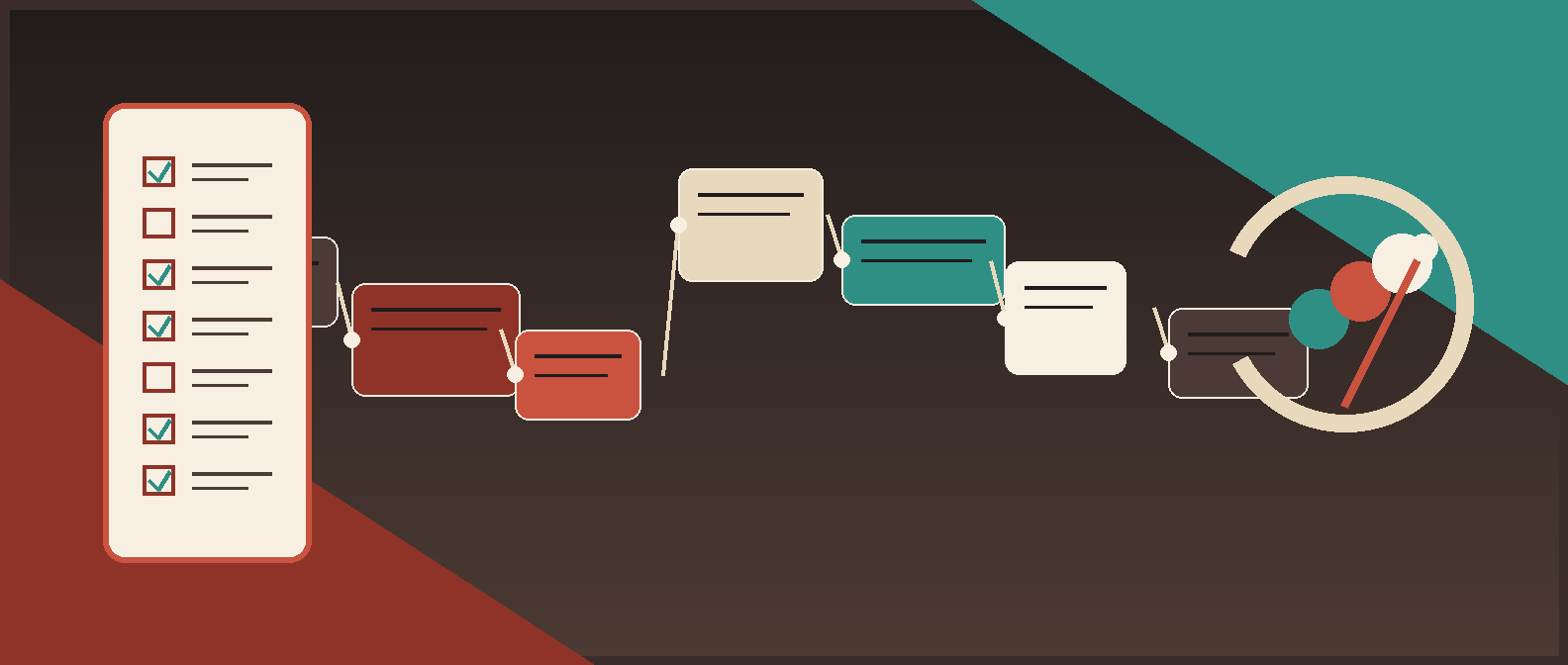
This article needs one generated hero and one supporting scorecard asset. It should also include public screenshots when rendered for publication because it names real platforms and partner categories.
| Asset | Path | Requirement |
|---|---|---|
| Hero image | /blog/images/best-api-integration-partners-for-ai-automation-projects.png |
Generated editorial hero showing API map, AI workflow controls, approval gate, and partner scorecard |
| Scorecard graphic | /blog/images/best-api-integration-partners-for-ai-automation-projects-scorecard.png |
Generated visual summary of the weighted partner scorecard |
| Red Brick Labs screenshot | /blog/images/best-api-integration-partners-for-ai-automation-projects-red-brick-labs.png |
Public homepage or AI automation page screenshot |
| Workato screenshot | /blog/images/best-api-integration-partners-for-ai-automation-projects-workato.png |
Public MCP or integrations page screenshot |
| MuleSoft screenshot | /blog/images/best-api-integration-partners-for-ai-automation-projects-mulesoft.png |
Public Agentforce or integration page screenshot |
| Accenture/OpenAI screenshot | /blog/images/best-api-integration-partners-for-ai-automation-projects-openai-frontier.png |
OpenAI Frontier Alliance or Accenture/OpenAI partnership page screenshot |
| Thoughtworks screenshot | /blog/images/best-api-integration-partners-for-ai-automation-projects-thoughtworks.png |
Public enterprise AI services page screenshot |
| Simform screenshot | /blog/images/best-api-integration-partners-for-ai-automation-projects-simform.png |
Public connected services/integration page screenshot |
| SoftServe screenshot | /blog/images/best-api-integration-partners-for-ai-automation-projects-softserve.png |
Public MuleSoft partnership page screenshot |
Do not hotlink screenshots. Capture public, non-gated pages only. Add alt text and captions near the screenshot block during final publishing.
Source notes
This comparison is an operator synthesis, not a sponsored ranking or lab benchmark. Sources reviewed on May 20, 2026:
- OpenAI Frontier Alliance Partners - current context for enterprise AI deployment partners, systems integration, workflow redesign, and global scale.
- OpenAI Deployment Company announcement - current signal that enterprise AI deployment is becoming a forward-deployed engineering and integration problem, not just a model access problem.
- Deloitte API governance for agentic AI - framing for why API maturity and governance matter as AI agents become API consumers.
- Workato MCP documentation and Workato integration library - current Workato positioning around MCP, identity-aware execution, audit integration, and connector coverage.
- MuleSoft Agentforce and MuleSoft integration overview - current MuleSoft positioning around AI agents, API catalogs, connectors, lifecycle management, and governed integration.
- Capgemini MuleSoft partnership and SoftServe MuleSoft partnership - examples of certified integration partner positioning and enterprise API-led delivery.
- Thoughtworks Enterprise AI Services and Slalom AI transformation services - examples of product engineering, modernization, and AI transformation positioning.
- Simform connected services and integration - example of API enablement, connected services, workflow automation, OAuth, OpenAPI, monitoring, and developer portal positioning.
- NIST AI Risk Management Framework - governance context for risk management, measurement, and oversight.
No unsupported market-size, adoption-rate, or ROI claims were used. The partner scorecard is Red Brick Labs' editorial buying framework.
Need a second set of eyes before you sign?
If you are comparing API integration partners for an AI automation project, Red Brick Labs can review the workflow, API surface, data risks, control model, and partner proposal before you commit.
Bring one messy workflow. We will tell you whether it is ready for AI automation, what integration architecture it needs, where humans should stay in the loop, and which partner type actually fits.
Book a 15-minute AI integration workflow audit, or start by documenting the workflow with the automation pilot intake template.
Audit your AI integration workflow: Red Brick Labs can map one integration-heavy AI automation workflow, score the API and data risks, and design the first production pilot with controls, monitoring, and owner handoff.
FAQ
What is the best API integration partner for AI automation projects?
For most mid-market operators, the best partner is a specialist AI automation implementer that can map the workflow, connect the existing stack, design human review gates, and launch a controlled pilot. For enterprise-wide API governance or platform rollout, a systems integrator or certified iPaaS partner may be a better fit.
Should we hire an iPaaS partner or build custom APIs?
Use an iPaaS partner when the platform already fits your stack, governance model, and connector needs. Build custom APIs when the workflow is strategic, proprietary, performance-sensitive, or poorly served by off-the-shelf connectors. Many serious AI automation projects use both.
What makes AI automation integration different from normal API integration?
AI automation adds judgment, uncertainty, and tool use. The system may classify, extract, retrieve, draft, decide, and then call APIs. That means the integration design needs stricter boundaries, human approvals, audit logs, testing, and failure handling than a simple deterministic workflow.
What should we ask an API integration partner before signing?
Ask how they handle auth scopes, rate limits, retries, idempotency, missing APIs, duplicate events, human approvals, audit logs, testing, monitoring, rollback, and owner handoff. If they only talk about connectors, they are not ready for production AI automation.